
Home › New Hampshire
A New Hampshire Homeowner's Guide to New Fences, Pool Fences and Fence Repair
Our New Hampshire coverage runs through four areas: around Nashua; Salem, Derry and Londonderry; Manchester and Bedford; and the Seacoast towns of Portsmouth, Dover and Rochester. New Hampshire does not license fence contractors and leaves permits to each town, so the rules for the same fence can change at a town line, and each town page spells out what its building and zoning offices expect. Phone (978) 800-2452 or use the form. A person reads every request and replies with what happens next.
- No cost to you
- State fence rules, plainly put
- Nashua to the Seacoast
Ask About Fence Service in Your Area
Tell us about the yard and the fence you want. A fence contractor that works nearby will phone you.
Please add your name, a 10-digit phone number and a valid email.
Your request didn't go through on our end. Please call (978) 800-2452 so it isn't lost.
Too many requests have come from this connection in a short time. Please call (978) 800-2452 and we'll take it from there.
We couldn't finish the spam check. Wait a moment and send it again, or call (978) 800-2452.
Where we work
Our New Hampshire towns
Every New Hampshire city and town issues its own building permits and may hold to codes stricter than the state's, and fence heights and setbacks come from local zoning. A town page, where we have one, describes when that town wants a fence permit, its height limits, any pool barrier or historic district review, and the homes and lots typical there. A town that has no page of its own yet is still one we serve, so send the request anyway.

Nashua Region
Salem, Derry & Londonderry
Manchester & Bedford
Portsmouth, Dover & Rochester
New Hampshire law
Vetting, contracts and town permits
No license to look up. In consumer advice dated March 10, 2022, the Attorney General's office says "contractors do not need to be licensed" in New Hampshire. The checking therefore falls to you: get references from earlier jobs and from the suppliers the contractor uses, and ask every contractor you talk to for proof of insurance (NH Attorney General).
Put it on paper. The same advice says to have a written contract before any work is done or any payment made. It lists a down payment over 50% of the final cost, and a request for full payment before the job is finished, among the warning signs. Problems can go to local police or to the Consumer Protection Hotline at 1-888-468-4454 (Consumer Protection Hotline). The state's Consumer Protection Act bars unfair or deceptive acts in trade and lets a consumer sue for damages (RSA 358-A).
Permits belong to the town. State law expressly reserves the issuing of permits and the collecting of their fees to counties, towns, cities and village districts, and local codes stricter than the state code remain in force (RSA 155-A:2). Where a town does not enforce the code itself, the State Fire Marshal may enforce the code on the town's written request (RSA 155-A:7). We could not confirm a statewide fence permit threshold, so ask your building department whether your fence needs a permit and ask zoning about height, setbacks and corner lots before materials are ordered.
The 2024 codes. New Hampshire switched its building code to the 2024 editions on July 1, 2026. For six months the old and new sets run side by side, so an application filed by December 31, 2026 may use either, and one filed on or after January 1, 2027 must use the 2024 set (Town of Merrimack code page).
Last verified November 2026. Fees, restrictions and deadlines on this page are due for re-checking by January 2027.
Pools, digging and neighbors
Pool barriers, post holes and spite fences
Pool barriers. State law adopts the International Swimming Pool and Spa Code by reference as part of the state building code, now the 2024 edition alongside the 2024 International Residential Code, though through December 31, 2026 a permit request may still use the 2021 set. (RSA 155-A:1; Merrimack summary of the state code dates). A pool fence is therefore governed by that code as New Hampshire adopts it, and your town building department enforces it.
Federal pool fence guidance. The Consumer Product Safety Commission's guidelines are not a mandatory standard and never take the place of adult supervision. They call for a barrier at least 48 inches above grade, no more than 4 inches of clearance under it (2 inches over grass, gravel and similar ground), and no gap a 4-inch sphere can pass through. Rails less than 45 inches apart go on the pool side with vertical gaps of 1¾ inches or less; chain-link mesh should be no bigger than 1¼ inches square unless slatted down to 1¾ inches. Gates should swing outward from the pool and close and latch by themselves, with any release under 54 inches placed on the pool side. Door alarms are advised where the house forms part of the barrier, and an above-ground pool's ladder should be secured, locked, removed or fenced (CPSC Pub. 362).
Dig Safe before post holes. State law defines excavation as any operation on private property or in a public way that moves or displaces earth; it leaves out farm tilling, landscaping and upkeep of a home done with non-mechanized tools, and mechanized lawn work such as edging, aeration and de-thatching, but setting fence posts is not on that list. Within 100 feet of an underground facility, notice is due at least 72 hours ahead, not counting Saturdays, Sundays and legal holidays, and no more than 30 days ahead, and the dig area must be premarked in white paint, stakes or other white markings; the notice is good for 30 calendar days. A homeowner digging on their own property is exempt from the civil penalty paragraph, not from the duty to give notice (RSA 374:48-56). Dig Safe notes that in New Hampshire, Election Day in even-numbered years counts as a holiday (how Dig Safe works). Call 811 or 888-DIG-SAFE; it is free (Dig Safe).
Spite fences. Under a statute dating to 1887, a fence "unnecessarily exceeding 5 feet in height, erected or maintained for the purpose of annoying" the owners or occupants next door "shall be deemed a private nuisance" (RSA 476:1). The injured neighbor may sue for damages, and if the neighbor wins, the owner must remove the fence within 30 days of judgment, after which a penalty of $10 a day runs (RSA 476). Height alone isn't enough; the fence must also be unnecessarily tall and meant to annoy. For a question about where the line runs, start with a survey or the town; this page is not legal advice.
What we refer
Fence jobs, explained for New Hampshire homeowners
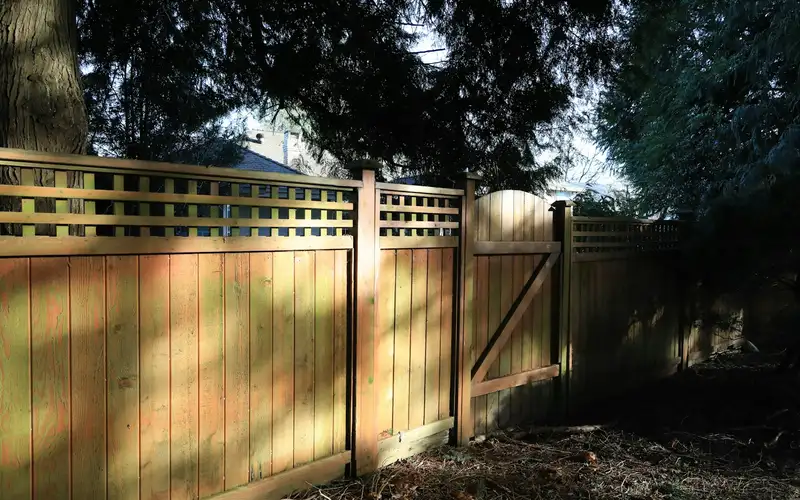
Wood Fences
Privacy, picket, stockade and split-rail fences in cedar or pressure-treated lumber, new or replaced.

Vinyl Fences
Low-upkeep PVC privacy, semi-privacy and picket fences, with matching gates.
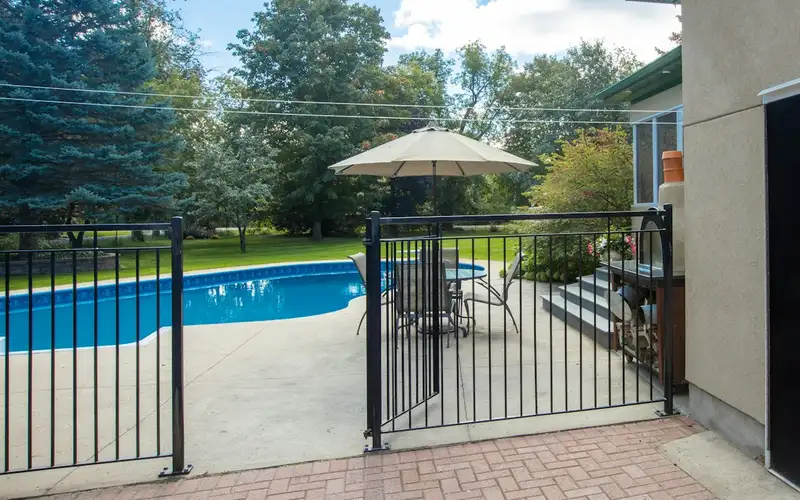
Chain Link & Aluminum
Galvanized or coated chain link and ornamental aluminum, including pool enclosures built to code.

Fence Repair
Leaning or rotted posts, sagging gates, storm-damaged sections and broken pickets or panels.
FAQ
Common New Hampshire fence questions
Does a fence contractor need a state license in New Hampshire?
No. According to the Attorney General, New Hampshire contractors need no license, which puts the vetting in your hands: get proof of insurance, names of past customers you can call, and the suppliers the contractor works with.
Will my fence need a town permit?
That is your town's call. Cities and towns issue building permits and can enforce codes stricter than the state's, so ask the building department whether your fence needs one and ask zoning about height and setbacks. Until December 31, 2026 a permit application may use the older or the 2024 code set; from January 1, 2027 it must use the 2024 set.
Does Dig Safe apply to a homeowner setting posts?
Plan on it. The state dig law covers excavation on private property, and setting fence posts is not among its listed exclusions (only hand-tool landscaping and upkeep of a home are), and Dig Safe asks to hear about any fence project. Give notice at least 72 hours ahead, excluding weekends and legal holidays, after marking the area in white. A homeowner digging on their own property is spared the civil penalty for not complying, but not the duty to call.
What rules apply to a pool fence?
New Hampshire adopts the International Swimming Pool and Spa Code as part of the state building code, and the town building department enforces it. Federal CPSC guidance calls for a barrier at least 48 inches tall, no gaps over 4 inches, and self-closing, self-latching gates that open away from the pool.
What is a spite fence in New Hampshire?
State law treats a fence that unnecessarily exceeds 5 feet in height, put up or kept to annoy the neighbors, as a private nuisance. A neighbor who wins in court can have it removed within 30 days of judgment, with a $10-a-day penalty after that.