
Home › Massachusetts › Reading
Fence Companies for Installation and Repair in Reading, MA
Reading leaves the choice of which side of the fence faces your neighbor up to you, and lets a fence run close to the lot line as long as you can look after it without stepping onto the abutting yard. Call (978) 800-2452 or use the form. A person reads every request and replies with what happens next.
- Free for homeowners
- Reading permit, pool and historic fence notes
- From the West Street district to the Ipswich River
Ask About Fence Service in Your Area
Tell us what kind of fence you have in mind. A person reads it and replies with what happens next.
Please add your name, a 10-digit phone number and a valid email.
Your request didn't go through on our end. Please call (978) 800-2452 so it isn't lost.
Too many requests have come from this connection in a short time. Please call (978) 800-2452 and we'll take it from there.
We couldn't finish the spam check. Wait a moment and send it again, or call (978) 800-2452.
Fences in Reading
What kind of fence work is it?
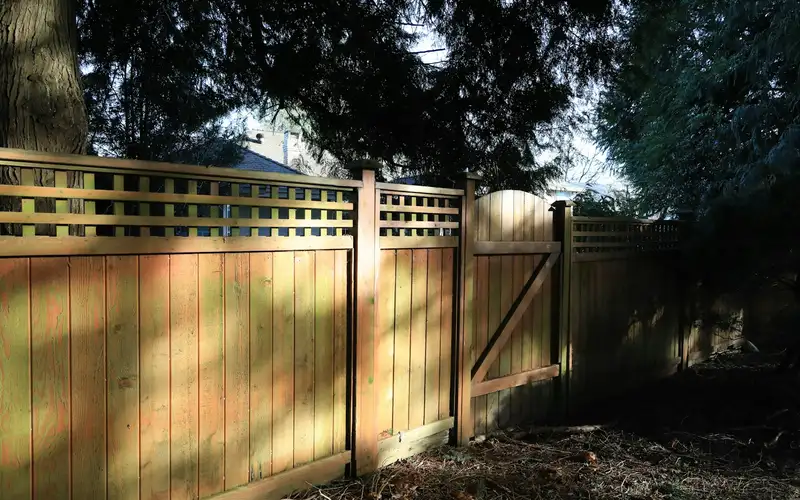
Wood Fences
Privacy, picket, stockade and split-rail fences in cedar or pressure-treated lumber, new or replaced.

Vinyl Fences
Low-upkeep PVC privacy, semi-privacy and picket fences, with matching gates.
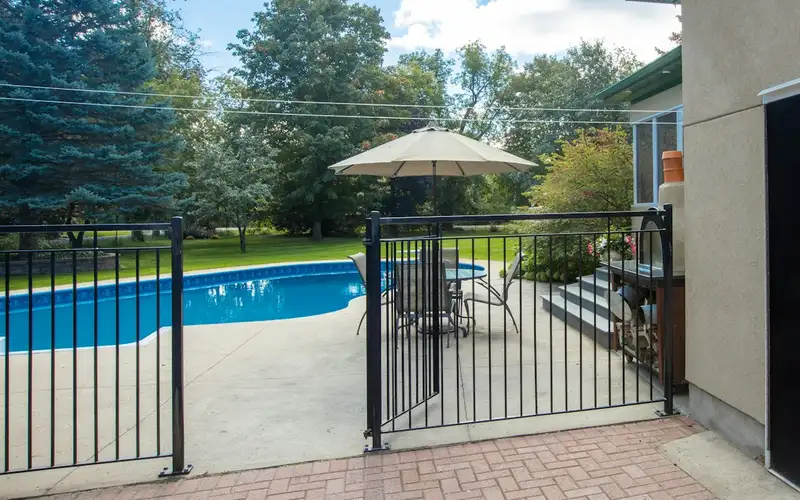
Chain Link & Aluminum
Galvanized or coated chain link and ornamental aluminum, including pool enclosures built to code.

Fence Repair
Leaning or rotted posts, sagging gates, storm-damaged sections and broken pickets or panels.
Fence near a wetland or in a historic district?
(978) 800-2452Tell us where the fence line runs and whether the house is on West Street or Summer Avenue, and we'll put you in touch with a fence contractor who knows Reading's review steps.
Permits
Fence permits in Reading
Two thresholds on the books. Reading's Permitting & Application Information page has a fence section that reads, "For a fence over 7' in height a building permit is required," and adds that the state building code regulates fence height. The Zoning Bylaw (footer dated April 2025) sets the line lower: section 5.5.1.1(b) requires a building permit for a fence exceeding six feet. Until the Building Division says otherwise, treat anything over 6 feet as a permit job and confirm with the town.
Who else signs off. The same page tells residents to contact Conservation and the Engineering Department for town approval, and to email the Historic District Commission when the property is in the historic district. Applications go through the town's OpenGov portal, which the permitting page links.
Posted fees. The Building Division has no separate fence fee. Its Building Permit Fees sheet, effective 8/2024, charges residential permits $13 per $1,000 of construction value with a $50 minimum, a $50 re-inspection fee, and a doubled fee when work starts before the permit is issued.
- Building page
- Permit for a fence over 7 ft
- Zoning Bylaw §5.5.1.1(b)
- Permit for a fence exceeding 6 ft (April 2025 edition)
- Town approval
- Conservation and Engineering; HDC in the historic district
- Residential fee (8/2024)
- $13 per $1,000, $50 minimum; doubled if work starts first
- Filing
- OpenGov portal
Massachusetts in brief. Under 780 CMR R105.2, "Fences not over seven feet" high are exempt from a state building permit, and the state's contractor chart words it as no permit or construction supervisor license for a fence under seven feet (HIC contractor resources). Contractors who work only on fences are exempt from home improvement registration, so the Guaranty Fund, which covers registered contractors, generally won't apply; a written contract is still a sensible precaution. Our Massachusetts rules page has the details.
Before the auger comes out. State law counts augering as excavation (c.82 §40). Notify Dig Safe at 811 at least 72 hours ahead, not counting Saturdays, Sundays and legal holidays, and no more than 30 days before digging (c.82 §40A). Dig Safe says property owners as well as contractors are required to notify it, its home page uses a fence on your own property as an example, and the service is free.
Last verified November 2026. Fees, restrictions and deadlines on this page are due for re-checking by May 2027. New England Fence Pros connects homeowners with fence contractors; we don't build fences or file permits ourselves.
Height and placement
Height limits, setbacks and corner lots in Reading
Fences sit outside the yard rules. Section 5.5.1.1(a) of the Zoning Bylaw keeps accessory structures out of a required front yard but makes an exception for flagpoles and fences, and 5.5.1.1(b) says fences are exempt from the front, side and rear yard requirements of Section 6.0. The bylaw's definition of a structure also leaves out fences and garden walls. In our reading of the bylaw we found no separate cap on fence height beyond the permit line, and no corner-lot sight triangle; if your lot fronts two streets, ask the Building Division about visibility at the corner before setting posts.
Which side faces out, and how close to the line. The town's permitting page states that "There are no regulations regarding which way the fence is installed." It also says a fence can be installed close to the property line provided you can maintain it without going onto the neighbor's property. Where the boundary actually runs is something a survey or the town can confirm.
Stone walls on scenic roads. Mill, Walnut and South Streets are scenic roads. Removing or altering any part of a stone wall in the public right of way there takes the written consent of the Community Planning and Development Commission, and the Scenic Roads Regulations presume a wall is in the right of way unless shown otherwise. The application is $90 plus notice costs, and a violation can bring a fine of up to $300 per citation. Keep a new fence behind the old wall rather than cutting through it.
Very tall fences. Massachusetts treats a fence that unnecessarily exceeds six feet and is put up maliciously to annoy a neighbor as a private nuisance (c.49 §21). Height alone doesn't make a fence a spite fence.
Pools
Pool fences in Reading
On the permitting page, a pool less than 24 inches deep needs no building permit, but above-ground and in-ground pools both need electrical permits. For an above-ground pool, the application includes the pool brochure, ladder information and a plot plan or GIS map showing the pool, its dimensions and setbacks, and where the fence goes. An in-ground pool needs a current certified plot plan with the dimensions of the pool and the fence and alarm locations, plus a stamped construction plan. Conservation approval, and Historic District Commission approval where it applies, is required no matter how small the pool. The page also links a Pool Barrier Requirements sheet and the state's 2021 swimming pool code, so read both before the fence is designed.
The zoning bylaw (section 5.5.1.3) allows a pool of any size outside the setbacks; inside a side or rear setback, it can be no larger than 600 square feet or 25% of the house's gross floor area, whichever is greater. Statewide, pool barriers follow the International Swimming Pool and Spa Code as adopted in 780 CMR. Federal CPSC guidance, which is advice rather than law, calls for a barrier at least 48 inches tall with no opening a 4-inch sphere can pass and self-closing, self-latching gates that open away from the water (CPSC Pub. 362).
Historic districts and wetlands
Historic districts and wetlands in Reading
West Street and Summer Avenue. Reading's local historic districts under General Bylaw section 7.3 are the West Street Historic District and the Summer Avenue Historic District Area (General Bylaw). The commission's design guidelines, adopted in May 2006 and updated February 22, 2024, review non-vegetative landscaping such as fencing, walls and paths when it can be seen from a public way. They favor wood, stone, brick or iron, say vinyl or synthetic fencing is not considered appropriate, and discourage fences running across the front of a property. Plants and trees are exempt. The commission decides within 14 days whether a project needs review and holds a hearing within 45 days.
Wet ground. The Conservation Division requires approval before work within 100 feet of a wetland, lake or pond, within 200 feet of a river or stream, or in the 100-year floodplain, and points residents to the town's online map at readingma.mapgeo.io. Its Wetlands Protection Regulations (December 2023) keep a 25-foot Zone of Natural Vegetation and bar new structures or fixtures, fences included, within 10 feet of it. Fencing that won't block wildlife can go through the $50 Minor Project path in the buffer zone, but that path rules out machine excavation and work within 25 feet of a resource area, so ask the Conservation Administrator before setting posts.
Reading's homes
Mid-century streets around an older center
Reading's 2023 Housing Production Plan says more than half of its housing units were built before 1960, and 72.5% of homes are single-family detached houses, so most fence lines here divide one detached house lot from the next. The state's 1980 historical survey of Reading also records center-chimney colonials from about 1735 to 1760, Greek Revival and Italianate houses along Woburn, Prospect and Salem Streets, and workers' cottages and double houses east of the center from 1870 to 1915.
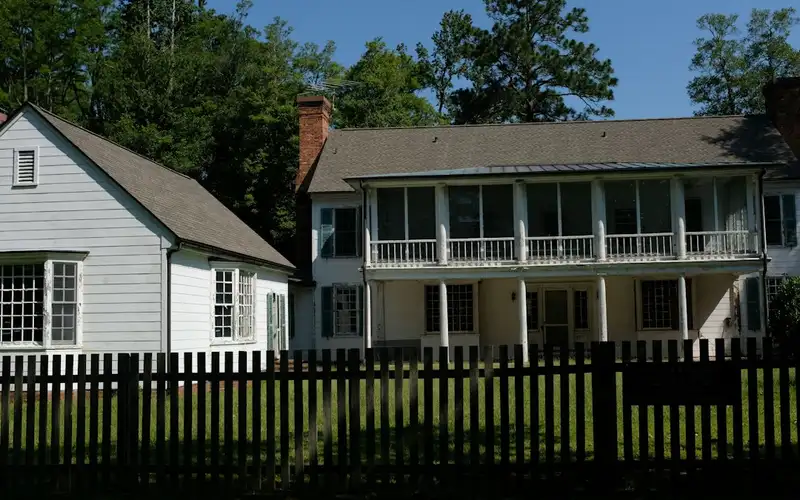
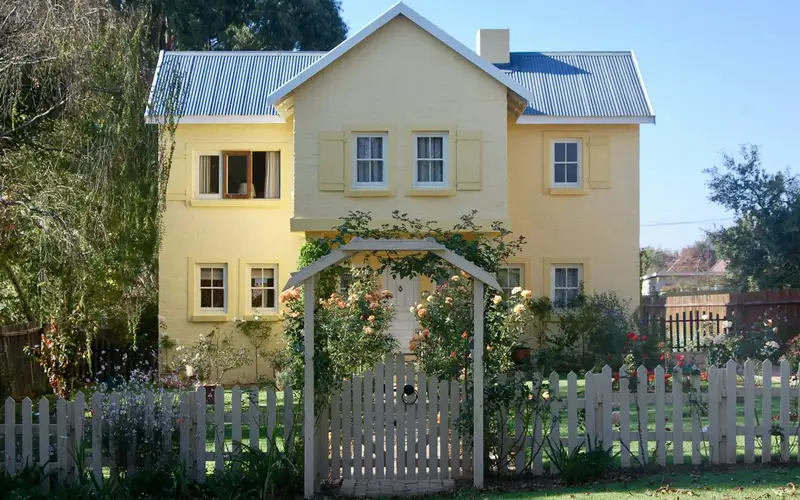
Water shapes many yards here. The town's Open Space and Recreation Plan maps 1% flood areas along the Ipswich River, Bear Meadow Brook and Walkers Brook, and counts swamps, wetlands and floodplains as more than 30% of Reading's land. On those lots, the Conservation check comes before the fence layout, not after.
FAQ
Reading fence questions
At what height does a Reading fence need a building permit?
The town gives two numbers. The Building Division's permitting page says a building permit is required for a fence over 7 feet, while section 5.5.1.1(b) of the Zoning Bylaw (April 2025 edition) says one is required for a fence exceeding six feet. Ask the Building Division which applies before you order materials for anything taller than 6 feet.
Does the good side of the fence have to face the neighbor in Reading?
No. Reading's permitting page says there are no regulations on which way a fence is installed. It also says the fence can go close to the property line if you can maintain it without going onto the neighbor's land, so leave yourself working room.
What do Reading pool permits ask about the fence?
An above-ground pool application needs a plot plan or GIS map showing the pool, its setbacks and the fence location. An in-ground pool needs a current certified plot plan giving the pool, fence and alarm locations, plus a stamped construction plan. Conservation sign-off, and the Historic District Commission's where it applies, is required for a pool of any size.
Can I put a vinyl fence on a house in a Reading historic district?
The Historic District Commission's design guidelines say vinyl and synthetic fences are not considered appropriate, and they encourage wood, stone, brick or iron instead. Fencing visible from a public way is reviewed, so talk to the commission before choosing a material.
What does it cost me to use New England Fence Pros?
Nothing. Asking is free for homeowners; the contractor prices the job, and the price and contract are between you and them.
Nearby