
Home › Massachusetts › Lowell
Fence Companies for Installation and Repair in Lowell, MA
Lowell puts its fence rule in two sentences: up to six feet, a fence may stand on or close to the lot line without a building permit, and anything taller needs one. On the city's narrow lots, the corner and the historic districts are where the questions start. Call (978) 800-2452 or use the form. A person reads every request and replies with what happens next.
- Free for homeowners
- Lowell permit, corner and historic fence notes
- Pawtucketville to South Lowell
Ask About Fence Service in Your Area
Tell us about the yard and the fence you want. A person reads it and replies with what happens next.
Please add your name, a 10-digit phone number and a valid email.
Your request didn't go through on our end. Please call (978) 800-2452 so it isn't lost.
Too many requests have come from this connection in a short time. Please call (978) 800-2452 and we'll take it from there.
We couldn't finish the spam check. Wait a moment and send it again, or call (978) 800-2452.
Fences in Lowell
What do you need fenced or fixed?
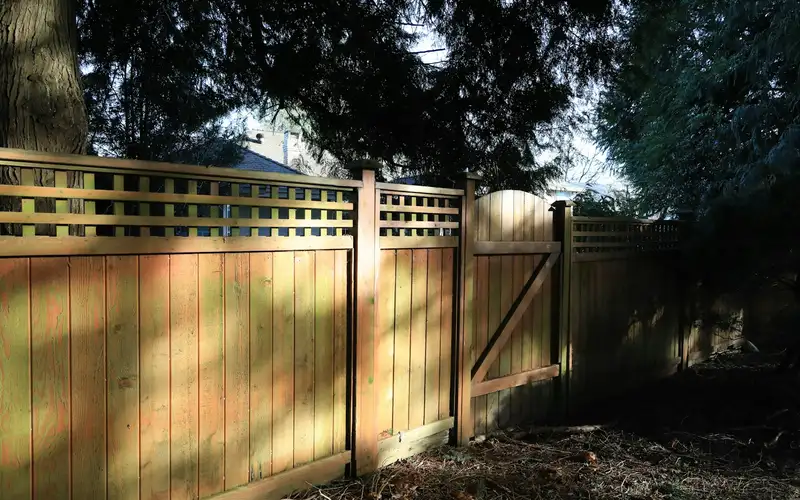
Wood Fences
Privacy, picket, stockade and split-rail fences in cedar or pressure-treated lumber, new or replaced.
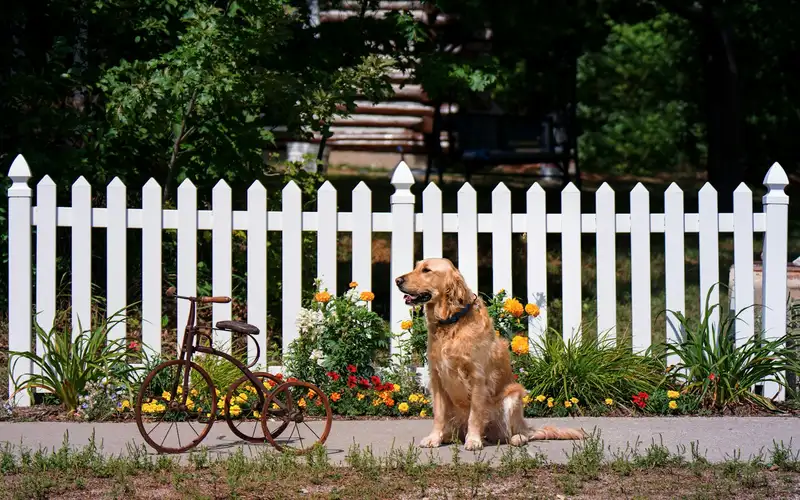
Vinyl Fences
Low-upkeep PVC privacy, semi-privacy and picket fences, with matching gates.
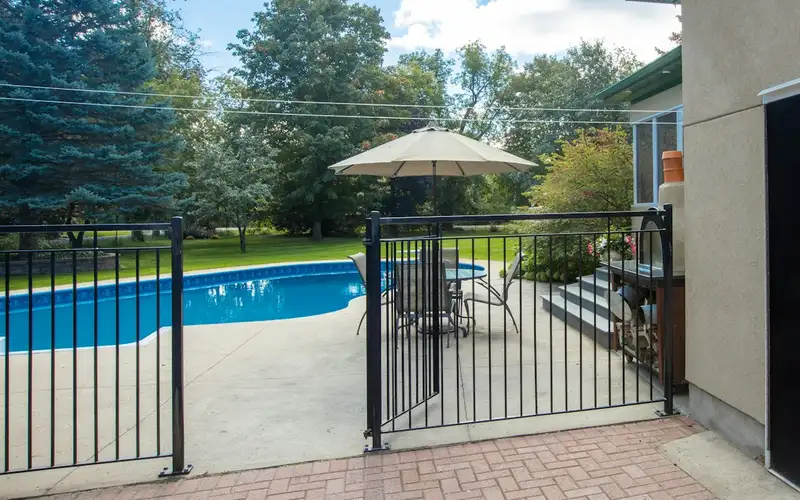
Chain Link & Aluminum
Galvanized or coated chain link and ornamental aluminum, including pool enclosures built to code.
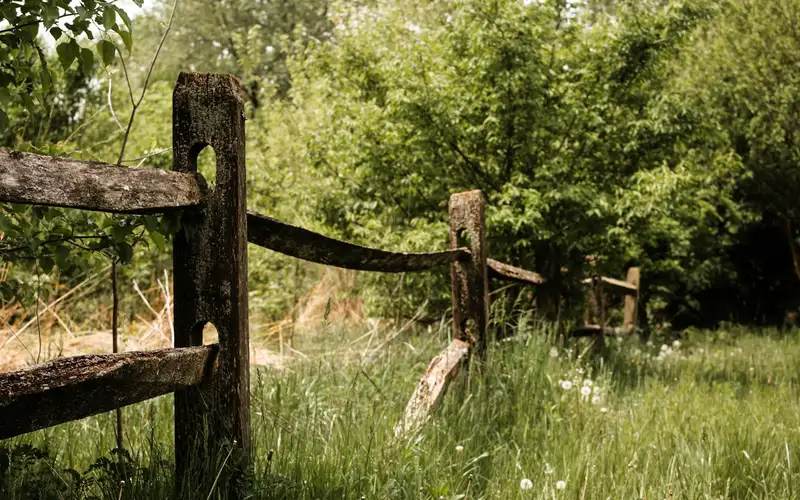
Fence Repair
Leaning or rotted posts, sagging gates, storm-damaged sections and broken pickets or panels.
Corner lot or historic district?
(978) 800-2452Say which street the house is on and how tall you want to go, and we'll connect you with a fence contractor who works in Lowell's tight city neighborhoods.
Permits
Fence permits in Lowell
The six-foot line. The city's Fence Permits page is short and direct. It says a fence up to six feet tall "may be located on or close to a lot line" and that "No building permit is required." Go above six feet and the same page says you are required to obtain a building permit. The page carries no date, so a quick call to Development Services (978-674-4144, City Hall, 375 Merrimack Street) is worth it before a tall order is placed.
Filing a taller fence. Applications start on the city's Building Permits page or online at css.lowellma.gov. The residential application has no fence category, so expect to describe the job in your own words. The posted Building Permit Fees run $50 for construction cost up to $1,000, plus $10 per $1,000 or fraction above that, and starting without a permit brings a triple fee. That page is undated, and the city notes the amounts follow its fee ordinance and can change without notice.
- Fence up to 6 ft
- No building permit; may sit on or close to the lot line
- Fence over 6 ft
- Building permit required
- Posted fee (undated)
- $50 up to $1,000 of cost, then $10 per $1,000; triple if built first
- Questions
- Development Services, 978-674-4144
- Near water
- Conservation Commission within 100 ft of a bank
The state layer, briefly. Massachusetts exempts "Fences not over seven feet" high from a state building permit under 780 CMR R105.2, and its contractor chart puts the line at under seven feet for both the permit and a construction supervisor license (HIC contractor resources). Lowell's own six-foot rule is the tighter one, so it is the number to plan around. A company that does nothing but fences is exempt from home improvement registration, which also means the state Guaranty Fund, open only for registered contractors, generally won't help on a fence job; put the terms in a written contract anyway. More on our Massachusetts rules page.
Dig Safe in the city. Massachusetts law counts augering as excavation (c.82 §40), so notify Dig Safe at least 72 hours before the first post hole, leaving out Saturdays, Sundays and legal holidays, and no more than 30 days ahead (c.82 §40A). Dig Safe says property owners and contractors alike must notify it (How It Works), names a fence on your own property as an example, and doesn't charge for the call to 811.
Last verified November 2026. Fees, restrictions and deadlines on this page are due for re-checking by November 2027. New England Fence Pros connects homeowners with fence contractors; we don't build fences or pull permits.
Height and placement
Height limits, setbacks and corner lots in Lowell
Fences can go in the required yards. Section 5.1.6 of the Zoning Ordinance (adopted December 7, 2004; the cover says it includes amendments approved through September 29, 2026) lists fences with awnings, arbors and flagpoles as objects that are not obstructions when placed in a required yard. That matters on lots where coverage is capped at 35 percent in the suburban and traditional neighborhood districts and the side yards are often a few steps wide. We found no separate fence height table by yard in the ordinance, and no rule on which face of the fence has to point outward.
Corners stay open. The Fence Permits page warns that a fence cannot obstruct views on corner lots. Section 5.2.8, Corner Clearance, gives the geometry: inside the triangle formed by the two street lines and a line joining points 15 feet from where they meet, no building, structure or fence may be put up, and no vegetation kept, "above a height of three and one-half feet" over the plane of the curb grades. Confirm the height with Development Services before you lay out a corner fence or hedge.
Where the line is. The city lets a fence of six feet or less sit right at the lot line, but it doesn't locate the line for you. On a lot with old or missing markers, a survey or the city can confirm the boundary before posts go in.
Pool fences in Lowell. The city's Swimming Pool Permits page requires a permit for any pool holding more than 24 inches of water, inflatable pools included, and says a residential pool needs a fence at least 4 feet high with a self-closing and self-latching gate; if the house wall is part of the enclosure, doors from the house to the pool must be alarmed. It also sets pools at least 5 feet from side and rear lines and 10 feet from the house. The zoning ordinance lets detached above-ground pools sit within side and rear yards, subject to the front yard rules (section 5.1.6). Barrier requirements come from the state building code, which adopts the International Swimming Pool and Spa Code; federal CPSC guidance, which is advice rather than law, describes a barrier at least 48 inches tall with self-closing, self-latching gates that open away from the water (CPSC Pub. 362). Ask the building office what it checks for at inspection.
Historic districts and wetlands
Historic districts and wetlands in Lowell
Eleven review districts. The Lowell Historic Board covers the Downtown Lowell Historic District and ten neighborhood districts: Acre, Andover Street, Belvidere Hill, Livingston-Harvard, Rogers Fort Hill Park, South Common, Tyler Park, Wannalancit Street, Washington Square and Wilder Street (Review Districts & Permitting). The city's advice is to contact Board staff to learn whether a project needs review.
The Acre is the broadest. There the Board reviews "The erection, demolition, reconstruction, or alteration of any exterior feature," and the work needs approval before it begins even if no building permit is required (Acre permitting process). Like-for-like replacements and easily reversed changes can go to staff as minor work, which the city puts at about seven days; other changes go to a hearing, about 30 days. Fences aren't named on that sheet, so ask before you replace or add one.
The other neighborhood districts. In the remaining nine, the Board approves in advance all demolition and new construction, and its 2012 design review standards ask new construction to respect character-defining site features. Those standards don't mention fences or gates. If your Belvidere Hill or Tyler Park fence would be visible from the street, a call to staff settles whether it counts.
Rivers and brooks. After the floods of 1936 and 1938, the Army Corps built a flood protection system in 1941 that guards the Lakeview Avenue neighborhood along the Merrimack River and Beaver Brook (Flood Protection). Away from that system, the Wetlands Ordinance (Chapter 280, adopted 2003 and last amended February 23, 2021) requires Conservation Commission permission to build within 100 feet of any bank of a perennial or intermittent stream, lake, river or pond, and it reaches land subject to flooding too. The ordinance doesn't single out fences, so treat a fence line in that strip as something to clear with the Commission first.
Lowell's homes
Old houses packed onto city lots
Lowell's housing stock is old by any measure. The city's Housing Production Plan 2024–2028 says 77% of homes were built before 1960, nearly a third before 1900, and only 4% after 2000. A fence here is often replacing one that has stood, in some form, for generations, and the lot it encloses is small.
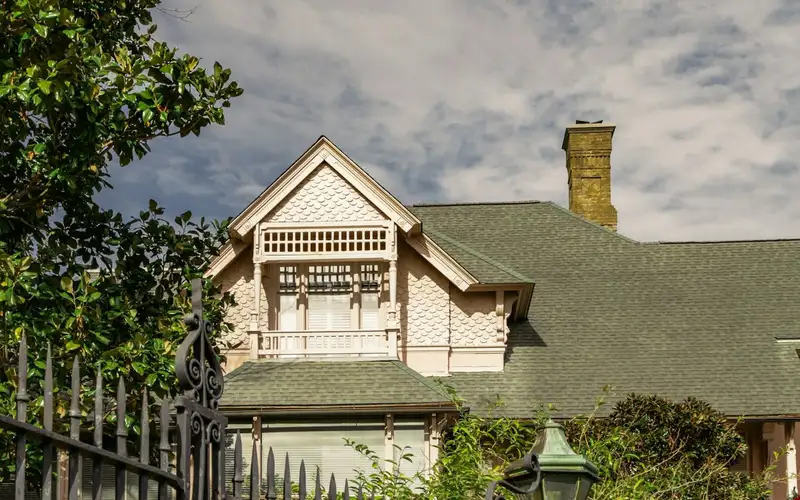
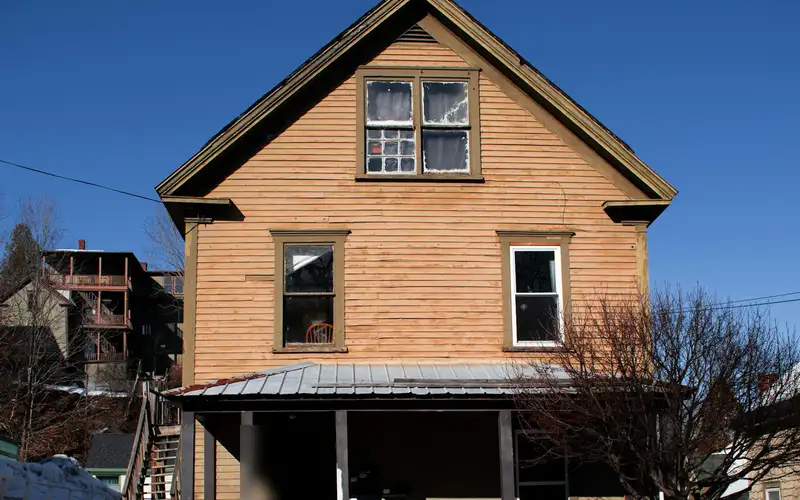
The state's April 1980 reconnaissance survey described much of Pawtucketville and low-lying Centralville as densely developed working-class areas and noted three-decker streetscapes across the river, and Belvidere and the Highlands as Victorian suburbs (MHC Lowell report). The city's Open Space and Recreation Plan names its neighborhoods as the Acre, Back Central, Belvidere, Centralville, Chapel Hill, Downtown, the Highlands, the Lower Highlands, Pawtucketville and South Lowell. In the three-decker blocks, a fence usually splits a narrow side yard or closes off a small rear lot; in Belvidere it more often borders a deeper yard on a hill, and several of those streets fall inside a Historic Board district.
FAQ
Lowell fence questions
How tall can a fence be in Lowell before I need a building permit?
Six feet. The city's Fence Permits page says a fence up to six feet in height may be located on or close to a lot line and that no building permit is required; a fence over six feet needs one. Development Services at City Hall (978-674-4144) answers questions.
How low does a fence have to be at a Lowell street corner?
Section 5.2.8 of the Zoning Ordinance covers the triangle formed by points 15 feet back from where the street lines meet. Its text sets the limit at "three and one-half feet" above the plane through the curb grades, and it covers fences, structures and vegetation alike. Confirm the height with Development Services before you set posts near a corner.
Does the Lowell Historic Board look at fences?
The Board's published materials don't name fences. In the Acre Neighborhood District it reviews changes to any exterior feature before work begins, even when no building permit is needed, and the city advises contacting Board staff to find out whether a project needs review.
My yard backs onto a stream in Lowell. Who do I check with?
The Conservation Commission. Lowell's Wetlands Ordinance (Chapter 280) requires its permission for work within 100 feet of any bank of a perennial or intermittent stream, lake, river or pond, and it also covers land subject to flooding.
What does it cost me to use New England Fence Pros?
Nothing. Asking is free for homeowners; the contractor prices the job, and the price and contract are between you and them.
Nearby